Bulandshahr Highway Gang Rape Case: 5 Convicts Sentenced to Life Imprisonment
In a landmark judgment, a Special POCSO Judge in Bulandshahr, Uttar Pradesh, has sentenced five members of the notorious Bawariya gang to life imprisonment for the gruesome gang rape of a mother and her 13-14-year-old daughter on a national highway nine years ago. The incident, which sparked nationwide outrage and drew sharp criticism of the state's law-and-order record, has finally seen justice delivered after protracted delays and twists in the trial.
The incident occurred on the night of July 28-29, 2016, when a family of six from Noida was traveling to Shahjahanpur on National Highway-91 (NH-91) near Dostpur flyover in Bulandshahr. Their car was stopped by a group of assailants, who held the family hostage at gunpoint, looted cash and jewelry, and gang-raped the mother and her minor daughter in a nearby field. The Central Bureau of Investigation (CBI), which took over the probe following orders from the Allahabad High Court, filed chargesheets against six accused, including gang kingpin Saleem Bawaria, who died in Bulandshahr jail in December 2019 due to illness.
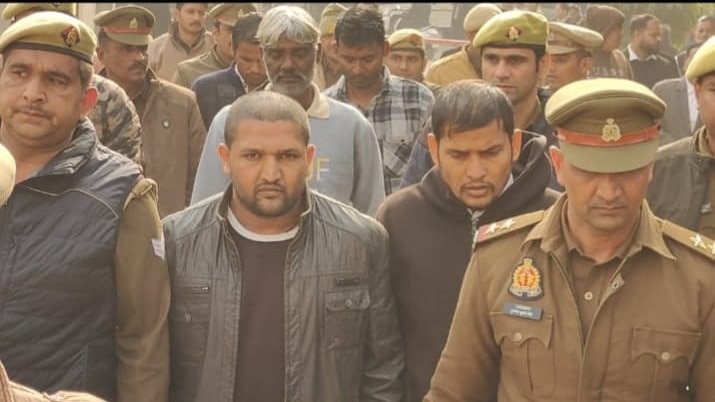
On December 20, 2025, Special POCSO Judge Om Prakash Verma convicted the remaining five accused - Juber/Zuber alias Parvez, Mohd Sajid, Dharmveer/Dharamvir Singh, Naresh Kumar/Naresh, and Sunil Kumar/Sunil - of gang rape and sentenced them to life imprisonment, along with a fine of Rs 1.81 lakh each. The fine amount will be distributed equally to the two survivors. The conviction is seen as a major judicial milestone, with forensic evidence and witness testimonies being instrumental in securing the verdict.
The case drew massive media and public attention in 2016, with the National Commission for Women criticizing the Uttar Pradesh police for FIR errors and negligence. The incident fueled debates in the 2017 UP Assembly elections, becoming a flashpoint against the then-government's law-and-order record. Measures like highway snipers and road rule changes were introduced in response to public pressure.
For the survivors, the conviction and sentencing have brought a sense of closure, albeit one that comes with the knowledge that their trauma persists. The minor survivor, now a law student, has relocated five times in the last decade due to harassment. The case highlights the need for strengthened deterrence for highway crimes and POCSO violations, as well as reinforced calls for highway policing reforms.
The CBI's role in high-profile cases like this one underscores the importance of external agencies in ensuring that justice is delivered in complex and sensitive cases. However, the protracted delays in the trial also underscore the systemic issues in India's judicial process for sexual offenses. The conviction and sentencing of the five accused in the Bulandshahr highway gang rape case serves as a reminder of the need for sustained efforts to address these issues and ensure that justice is delivered in a timely manner.
As the survivors and their family begin to rebuild their lives, the Bulandshahr highway gang rape case serves as a stark reminder of the need for continued vigilance and advocacy to ensure that women's safety on highways is prioritized. The life sentences handed down to the five accused are a welcome step towards justice, but they also underscore the need for more sustained efforts to address the systemic issues that allow such crimes to occur in the first place.
📰 Source: India Today - Education