
Misinformation being spread on Aravalli mining, govt taking ecology, economy together, says Minister amid row
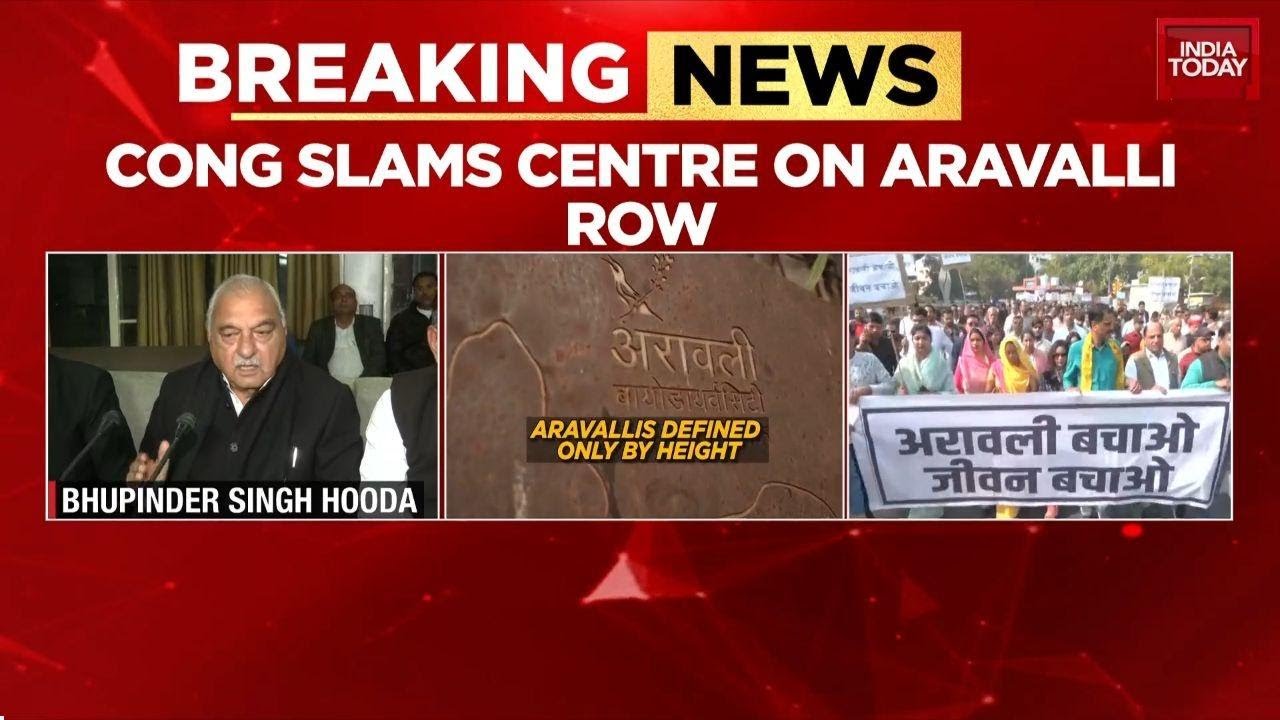
Rajasthan's fragile Aravalli Hills, a two billion-year-old mountain chain, have been at the center of a bitter environmental and political row since the Supreme Court accepted a new definition of the range on November 20, 2025. The ruling, which clarifies the boundaries of the Aravalli Hills and Ranges by setting a 100-meter threshold above local relief, has sparked widespread protests and heated debates across the state.
The controversy erupted as opposition parties in Rajasthan warned that the new definition weakens protections and enables mining, while the central government insists that the Aravallis remain safeguarded. Amidst the chaos, a senior minister emphasized the government's commitment to taking "ecology and economy together," suggesting a balance between environmental conservation and regulated economic activities like mining.
The row intensified in the past few days, with live coverage of street protests and political debates involving states like Haryana, Rajasthan, and Gujarat. The key players in this high-stakes drama include the Supreme Court bench, the Union Ministry of Environment, Forest and Climate Change (MoEFCC), the Rajasthan state government, opposition parties, conservationists, and environmental experts.
Opposition parties and conservationists claim that the 100-meter threshold excludes over 90% of the Aravalli range from automatic protection, risking expanded mining, construction, desertification, and water loss. They argue that the new definition is flawed and would have catastrophic consequences for the region's ecology. Conservationists like People for Aravalli collective warn that the cumulative impact of mining in arid regions is permanent, leading to soil instability, agricultural decline, and loss of biodiversity.
Courts have repeatedly curbed unregulated mining in Rajasthan and Haryana since the 1980s, citing the ecological role of the Aravallis in absorbing rainfall, supporting biodiversity, and recharging water bodies in arid zones. Experts stress that the Aravalli range's ecological significance goes beyond mere height and that cumulative mining impacts in the region are irreversible.
The Aravalli range, which spans Rajasthan, Haryana, Gujarat, and Delhi-NCR, has been plagued by decades of unregulated mining. The Supreme Court imposed mining bans in key Haryana districts in 2009, following a series of judicial interventions since the 1980s. These interventions addressed the ecological degradation caused by unregulated extraction, including lost surface water bodies, dust-covered crops, and reduced productivity.
The November 20, 2025, judgment by the Supreme Court followed MoEFCC recommendations to standardize definitions amid mapping conflicts that fueled disputes. The judgment mandated a detailed mapping and management plan to regulate mining locations and prevent disputes. A May 2025 citizens' report by People for Aravalli documented severe heritage loss in Haryana's seven Aravalli districts.
For local communities in Rajasthan, Haryana, and Gujarat, expanded mining under the new definition could accelerate desertification toward Delhi-NCR, eliminate more water bodies, and further decline agricultural output due to dust and drainage disruption. Economically, it may boost jobs and revenue from regulated mining but risks irreversible environmental damage, including fragile ecosystem collapse and reduced rainfall absorption in semi-arid areas.
The implications of this row are far-reaching, threatening biodiversity, public health, and long-term sustainability. The Aravali Green Wall project, aimed at land restoration, is also at risk of being undermined by the expanded mining. As the controversy continues to unfold, one thing is clear: the fate of the Aravalli Hills hangs in the balance, and the clock is ticking.
The central government's commitment to taking "ecology and economy together" remains to be tested in the face of fierce opposition and criticism. Will the government's promise to balance environmental conservation with economic activities be enough to allay concerns about the Aravalli Hills? Only time will tell, but one thing is certain: the future of this fragile ecosystem hangs precariously in the balance.
📰 Source: India Today - Education